
If you have been trying to build in Accra, you have probably heard some version of this story: someone hires an architect, waits months for drawings, then sends those drawings to three contractors for a quote. The cheapest contractor wins. Six months into the build, the contractor and the architect have never met. Variations pile up. The client is called every week to make decisions nobody planned for. The budget doubles. The finish date disappears.
This is not bad luck. It is the predictable consequence of separating architecture from construction — hiring two different firms with different incentives and no shared accountability for the outcome. The architect is paid for drawings, not for what gets built. The contractor is paid by variation, not by the quality of the original design. The client pays for both.
There is a better way. It is called design-build, and it is what Eli Kalel Construction & Architecture does.
What Is Design-Build?
Design-build means a single firm handles every stage of your project — site assessment, concept design, architectural drawings, structural and MEP engineering coordination, permit acquisition, construction, interior design, and handover — under a single contract with a single point of accountability.
You brief us. We design it. We permit it. We build it. We hand over the keys.
This is distinct from the traditional model where the client separately appoints an architect, then separately appoints a contractor, then separately appoints an interior designer, then acts as the coordinator between all three — a role that most clients are not equipped or available to do, particularly those based overseas.
The Traditional Model’s Real Costs in Ghana
The traditional separate-appointment model creates five predictable failure modes in the Ghanaian construction context:
1. Design-Reality Gaps
An architect who does not regularly build in Ghana may produce drawings that reflect ideal conditions — flat sites, standard material availability, typical procurement lead times. The contractor who builds from those drawings faces reality: sloping ground, a discontinued tile specification, reinforcement bar that is not delivered on schedule. Substitutions are made. The design intent is lost. Nobody is clearly responsible.
2. Cost Inflation Through Variations
In the traditional model, variations — changes to scope, materials, or specifications discovered after the contract is signed — are priced by the contractor at full market rate with margin. Every clash between the architect’s drawing and site conditions becomes a variation. Every item the client changes (or is forced to change) is a variation. In Ghana’s construction market, projects routinely end up 30–60% over the original contract sum through variations alone.
3. No Clear Accountability
When something goes wrong in a two-firm project — a beam is in the wrong position, a window is the wrong size, the drainage falls the wrong way — the architect says the contractor didn’t build to the drawing. The contractor says the drawing was unclear. The client, who is neither an architect nor a contractor, has no way to adjudicate this. Disputes can take years to resolve while your building sits incomplete.
4. Diaspora Vulnerability
A significant proportion of residential construction projects in Accra are funded by Ghanaians abroad. The diaspora investor who cannot be on-site is uniquely exposed under the traditional model: they rely on the contractor to report progress, the contractor has no architect enforcing quality, and the architect is not responsible for the build. Stories of incomplete, poorly built, or fraudulently reported diaspora projects are unfortunately common across Accra and its satellite areas.
5. Time Delays
Every handoff between architect and contractor is a delay opportunity. Drawing revisions requested by the contractor, resubmission to the planning authority for amendments, procurement disputes — all take time. In Ghana’s construction environment, where rainy season windows matter for concrete and roofing, time delays have direct cost consequences.
Why Design-Build Solves These Problems
In a design-build arrangement with Eli Kalel, the incentive structure changes completely:
- We design what we can build. Our architects and engineers design with full knowledge of Ghanaian material availability, supplier lead times, and site conditions in Greater Accra. There are no design-reality gaps because the people who draw the building are the same people who will build it.
- One contract means one price. Variations are minimised because the design is developed to construction-ready detail before the build price is fixed. When a change is genuinely necessary, we can assess its cost impact immediately because we control both design and construction.
- Single accountability. If something is wrong with your building, there is one organisation responsible for fixing it: Eli Kalel. No pointing between architect and contractor. No unresolvable disputes. One phone number, one answer.
- Remote client management. For diaspora clients, we provide regular photographic and video progress reports, milestone-based payment schedules tied to certified work stages, and a single relationship manager who knows your project. You do not need to be in Ghana to have confidence in your project’s progress.
- Faster delivery. Design, procurement, and construction can be overlapped in a design-build project. Foundation procurement begins before every last architectural detail is resolved. Long-lead items are ordered early. The result is typically 20–30% faster delivery than a traditionally procured project of the same size.
What Services Does Eli Kalel Provide Under One Roof?
Our integrated service covers the complete project lifecycle:
- Site appraisal and feasibility — assessing your plot for buildability, access, drainage, soil conditions, and planning compliance before you commit to a design brief
- Concept design and 3D visualisation — detailed 3D renders of your completed home before a single block is laid
- Architectural drawings — prepared by our registered architects to full AMA permit submission standard
- Structural engineering coordination — foundation design, column-and-beam schedules, slab specifications, and structural calculations
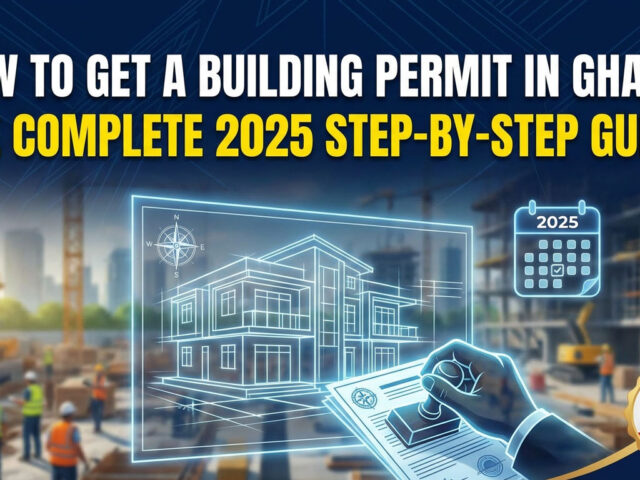
- Building permit management — we prepare, submit, and track your permit application through the AMA, attending all inspections
- Construction management — our trained site teams execute the build under the direct supervision of our project managers, with daily site logs and regular client reporting
- MEP coordination — plumbing, drainage, electrical, and air conditioning provision integrated into the structural build, not bolted on afterwards
- Interior design and finishing — from tile selection and kitchen specification to joinery and lighting design
- Handover and defects period — a structured handover process with a documented snag list, a 12-month defects liability period, and post-handover support
Which Projects Is Design-Build Right For in Accra?
Design-build is particularly well-suited to:
- Residential new builds — 3, 4, and 5-bedroom homes across Greater Accra, whether a family home or a rental investment property
- Storey buildings and duplexes — where structural complexity makes tight architect-contractor coordination critical
- Diaspora projects — where the client cannot be present and needs a single, trusted firm managing everything
- Commercial fit-outs and office buildings — where programme certainty and minimal disruption are priorities
- Renovations and extensions — where work on an existing structure requires integrated design and construction knowledge to avoid structural damage
Architecture and Construction Companies in Accra: What to Look For
When evaluating any architecture and construction firm in Accra, ask these questions:
- Are your architects registered with the Architects Registration Council of Ghana and listed in the current Good Standing list?
- Can you show us completed project photographs and connect us with previous clients?
- What is your payment schedule and how is it tied to certified construction milestones?
- Who is the project manager assigned to our project and what is their qualification?
- Do you handle building permit submissions, or is that our responsibility?
- What is your policy on variations — how are they priced and authorised?
- Do you carry professional indemnity insurance and contractor’s all-risks insurance?
A firm that hesitates on any of these questions is a firm that has something to hide or a process that is not properly structured. Eli Kalel answers all of these questions with documentation.
Build Your Vision With Eli Kalel
Eli Kalel is Accra’s integrated architecture, interior design, and construction firm. We take projects from a conversation to a set of keys — managing every professional, every permit, and every nail in between. Whether you are planning a contemporary family home in East Legon, a rental property in Adenta, or a commercial development anywhere in Greater Accra, we would like to show you what a properly managed project looks like.
Call us on 0550 338 661 or fill in our project enquiry form for a free initial consultation. No obligation. Just a real conversation about what you want to build.